Multiple moving parts and competing interests are a feature of M&A activity, but all the more so when a pension is involved. By engaging early, the scheme’s trustees will be in a better position to understand what’s driving the transaction, ensure the interests of scheme members are appropriately protected and support the deal process.
You can’t prepare enough!
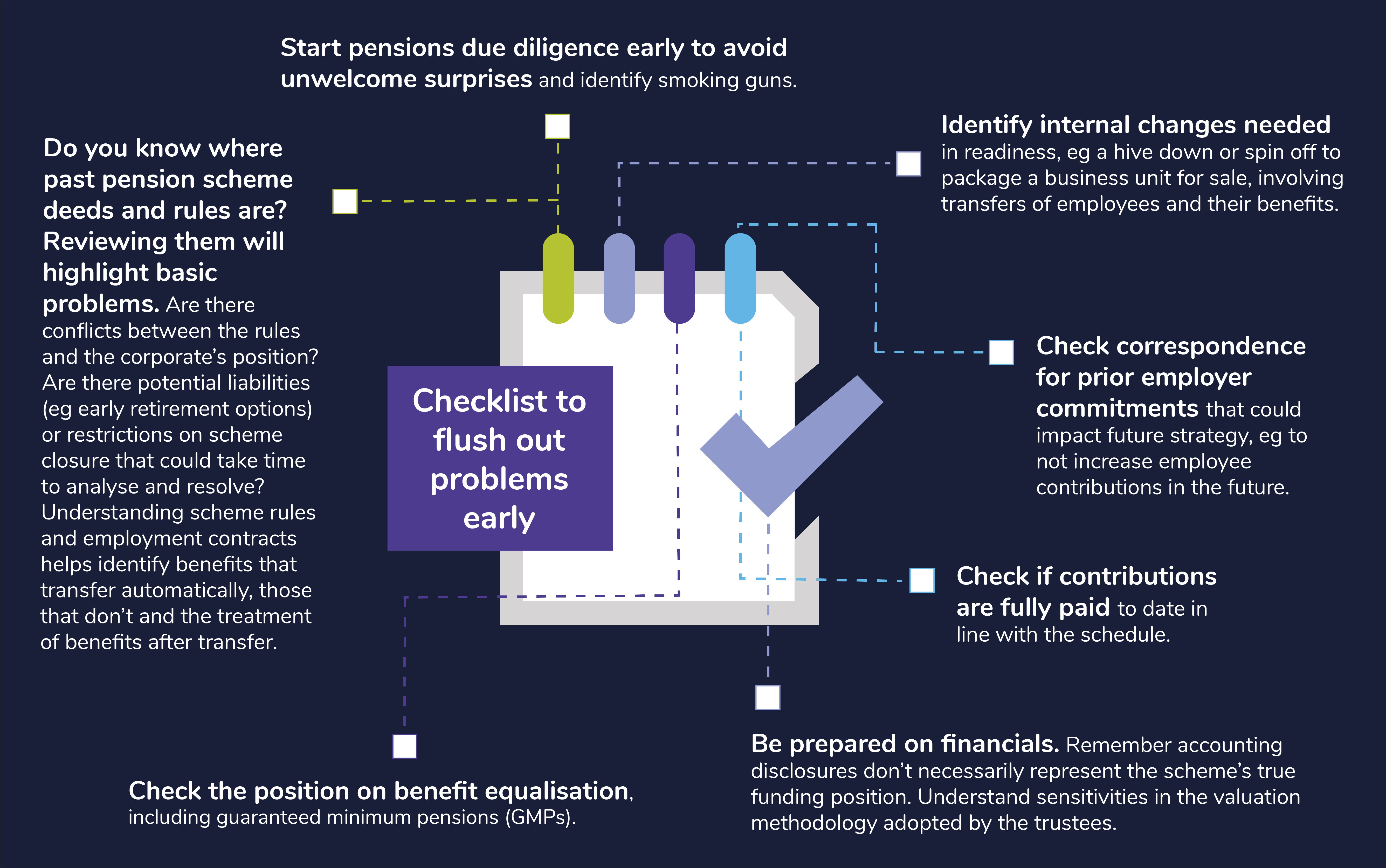
Defined benefit (DB) schemes are an important element of deal pricing and their existence has been known to deter bidders. Contribution requirements for poorly funded schemes can affect financial performance, capital expenditure and credit ratings generally, but poor funding levels may also need to be addressed in corporate transactions. The earlier a trustee can engage, the less likely it is that pension issues will hamper the M&A process and timeline.
With a range of stakeholders involved, information flow, clear communication, collaboration, and flexibility are key to a good outcome for all involved. Vidett’s experience of similar transactions means we understand the impact that corporate activity can sometimes have on pension schemes. However, we’re used to working with our advisers to quickly identify if mitigation will be needed or not and to find solutions so deals can be transacted on time, whilst safeguarding members’ interests.
Get to know your pension trustees and their role
Having a good working relationship with an experienced trustee team is really important. Getting professional trustees involved at the planning stage saves time and gives the best chance that pension issues are understood and addressed early.
- Identify conflicts and have protocols to manage them. If the trustee with the most relevant skills is employer nominated and/or part of the M&A team, the conflict needs managing and a replacement trustee may be needed.
- Understand the pensions regulatory framework. Professional trustees like Vidett’s can support discussions at the initial stages, helping deal parties understand the factors trustees have to address before they can get comfortable with the deal as well as the situations where regulatory involvement may be required. In our experience, the earlier the dialogue, the less likely you are to face unwelcome surprises and delays down the line.
- The Pensions Act 2021 brings the prospect of increased sanctions for those that fail to notify The Pensions Regulator or adequately address any material detriment to a pension scheme as a result of corporate activity. It’s advisable to know the regulatory requirements and take them seriously. It may also be appropriate to make the Pension Protection Fund (PPF) aware if there is any possibility of a breakdown in the transaction leading to the scheme commencing a PPF assessment period. Vidett has an excellent working relationship with both TPR and the PPF and can facilitate any appropriate discussions quickly and with minimum fuss.
- Soft skills should not be under-estimated. A solutions-focused trustee who is a seasoned deal-maker or skilled mediator can provide invaluable support to a deal process. Trustees who can manage advisers effectively will also drive efficiencies and help keep things on track.
- Understanding each party’s perspective, role and responsibility. It’s worth remembering that the trustee’s role is to review and understand the proposal and potentially challenge the company. Constructive and open communication can streamline this process.
Be ready to share information
Sharing commercially sensitive information with trustees and their advisers needs effective management. A non-disclosure agreement and insider list may be needed. Employers should be primed to provide detailed information about the transaction and share any plans for the pension scheme quickly. Trustees should identify the sort of information they’ll need to take advice quickly and efficiently.
Splitting a scheme
Corporate transactions can involve reorganisation or the hiving in or out of companies along business lines. Splitting pension assets and liabilities – and even pensioners – can be a difficult task, impacting administration, investment strategy, cashflow and more.
Expect to discuss financial repercussions on the scheme
Trustees will need to undertake a covenant review if the scheme sponsor may become financially weaker or if a value-generating entity will move further from the scheme in the new corporate structure. This can add complexity and expense, but an experienced trustee can quickly help identify what information is needed and identify potential solutions to address issues.
Coordinate member communications and consultation
M&A activity can be disruptive for a workforce:
- Engage with members so they know what’s coming and can be reassured the transaction will not mean their pension benefits are being altered or weakened as a direct result.
- Employers and trustees should ensure consistent messaging about pensions, the timeline, actions needed and the potential impacts of a transaction .
- Remember the basics of good communications: segment your ‘audience’; focus on clarity of key messages; and use a range of communication methods.
- Active employees need particular focus – their jobs/way of working may be impacted by corporate activity as well as their pension. If large scale job movements are anticipated, it is important that the scheme administrator, auditor and actuary are briefed at the appropriate time. Care must be taken however in terms of disclosure and timing of information to limit the risk of unwanted rumours or uncertainty for members.
- Cross-border transactions can add complexity, particularly where there’s significant impact on workers’ rights. If there is a culture of industrial relations, works councils and union representatives may have rights to information and consultation that need to be respected and reflected in communication strategies and deal timeline.
To learn more about the above, please contact Louise Webb or Kevin Dolan from our corporate transactions and restructuring team.
Please note that some of this article originally featured on the REBA website.